
Spirulina, Chlorella, Wheatgrass and Barley Grass
These 4 green foods are some of the world’s most nutritional foods and can help you by considerably boosting your nutrient intake.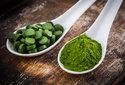
What is Spirulina?
No other food on earth can match the health benefits of Spirulina. It’s a deep blue green algae plant with a high ph (very alkaline).
It has been used as a food source for centuries and has recently been given the go ahead by NASA to be used a complete food supplement in space. Studies have found that 1kg of Spirulina has the same nutrients as 1,000kgs of vegetables! So just by having a teaspoon a day, you are helping towards your daily recommended 4 to 9 servings of vegetables whilst protecting yourself from the stress, pollutants, toxins and chemicals that are part of today’s world.
Spirulina is a complete protein ( between 60-69%) and contains all the essential 9 amino acids. It also contains essential fatty acids including GLA ( which can reduce cholesterol and prevent heart disease), vitamins B and E, chlorophyll, phytonutrients and wide range of minerals including potassium, zinc, chromium, copper, selenium and iron. Here are some of the ways in which Spirulina can help :-
1) Helps to Detoxify – Spirulina can help with you to detox your body naturally – this is due to the high level of chlorophyll which has been shown in studies to bind to heavy metals such as mercury ( which can leach from dental fillings) and cadmium and help to excrete them from the body.
2) Helps Digestion – Spirulina promotes healthy bacteria in the gut and helps with the body’s ability to absorb nutrients from food as well as surpressing the bad bacteria such as e-coli and candida.
3) Helps boost the Immune System – Spirulina is a very powerful food for the immune system. It works by increasing T-cell counts ( the cells that help direct the immune system’s response to infection or malignancy).
The Russian government was granted the use of Spirulina in 1994 to help to reduce allergic reactions from radiation in children who were exposed to radioactive material after the Chernobyl nuclear disaster in 1986. The children who received 5g of Spirulina for forty-five days were successfully able to fight the effects of radiation poisoning .
4) Boosts Endurance Levels
Spirulina is a great superfood and is of great benefit when taken before a high intensity workout. It helps with energy levels and boosts stamina whilst helping to repair muscles in the body. It also helps with general fatigue.
5) Helps support healthy brain function
The essential amino acids in Spirulina have been found to balance brain chemistry as they contain all the elements which are necessary for neurotransmitter functioning.
6) Protects against allergic reactions.
Studies have shown that Spirulina can stop the release of histamines which are the main cause of allergic reactions such as sneezing, itching etc.
Chlorella
An equally amazing superfood is Chlorella , the cousin of Spirulina. It is a green algae plant which derives its name from the Greek ‘chloros’ meaning green and ‘ella’ meaning small.
Similar to Spirulina, it is a nutrient dense superfood containing around 60% protein and all the essential amino acids. It also contains high levels of chlorophyll and beta-carotene, vitamins A ,C, B1, B2, B5, B6, B12, E and K and minerals such as iron, calcium, potassium, magnesium and phosphorous.
As it’s name suggests, it contains high levels of chlorophyll which makes it even more suitable than Spirulina as a detoxifier. It also contains more iron than Spirulina and contains a special growth factor which can help repair damage to nerve tissue.
In the 1950’s, the Carniege Institute in Washington confirmed that chlorella could be grown on a large commercial scale to help solve the world’s hunger problem. Chlorella has been widely used in Japan for decades due to its impressive health benefits which include improving the immune system and digestion, helping reduce inflammation and cleansing the body of heavy metals and carcinogens. It is a very helpful supplement to use during a cleanse. Similar to Spirulina, it has been shown to increase the good bacteria in the gut which can help to treat ulcers, colitis, diverticulosis and Crohn’s disease. Chlorella has also been used to treat cancer and help protect the body from the effect of cancer radiation treatment.
Wheatgrass and Barley Grass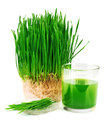
Word is spreading about these grasses as healthy super foods. The reason is that they contain high concentrations of valuable minerals, enzymes, vitamins and chlorophyll.
They are also highly alkaline which can help to balance the ph levels in the body. Highly processed diets and stress can result in the body becoming too acidic which can lead to illness and fatigue so foods like wheatgrass can be a great help.
Wheatgrass Benefits
Wheatgrass is one of the world’s most powerful foods, Dr Ann Wigmore was one of the first pioneers of Wheatgrass when she used it as part of her living foods program designed to overcome chronic illness.
Wheatgrass is grown from the germinated seed of wheat grains. When 2-3 ins high, the wheatgrass is ready to be harvested. This means that is it gluten free because it is cut before the grain forms. It must be processed either as juice, powder concentrate or in capsule form before it can be consumed. It is made up of 70% chlorophyll and it has such a high nutrient-to-calorie ratio that it is considered to be a complete food in itself or a superfood. One pound of fresh wheatgrass has the same nutritional value as 23 pounds of garden vegetables! Here are some of the main ways in which Wheatgrass helps:-
1) Blood purifier
Chlorophyll is a green pigment found in then chloroplasts of algae and plants. It is formed in the presence of sunlight by the process of photosynthesis. It is thought to be beneficial to human health because it closely resembles the chemical make-up of ‘haem’ – part of the haemoglobin of human blood. The Japanese food scientist, Dr Yoshide Hagiwara, has suggested that chlorophyll can be absorbed directly into the blood because it is fat-soluble which means that the fat particles pass directly into the blood via the lymphatic system.
2) High Vitamin and Mineral Content
Wheatgrass contains vitamins A, C, E, K and the full spectrum of B vitamins. It contains many minerals including iron, phosphate, boron, copper, selenium, magnesium, calcium, potassium, chromium, manganese, phosphorous, silicon and zinc.
3) High Protein content
Wheatgrass contains all the essential amino acids which means it’s protein profile is similar to that of animal products. As it is a plant-based protein, it is also lean and doesn’t contain the high levels of saturated fat found in animal and dairy sources.
4) Dietary fibre in wheatgrass
Wheatgrass is rich in insoluble fibre which is the type of fibre that passes through the digestive tract undigested and largely unchanged effectively sweeping the intestines clean.
This high level of fibre is a big support to digestive health, the circulatory system, healthy blood sugar levels and even healthy weight loss as the levels of fibre will help you feel fuller for longer.
5) Enzymes in wheatgrass
Wheatgrass is a good source of exogenous enzymes (i.e those not produced by the human digestive system) which makes wheatgrass an important digestive aid.
Barley Grass Benefits
Barley Grass and Wheatgrass are very similar to each other and therefore offer similar nutritional benefits but Barley Grass also acts as a free-radical collector. Free-radicals in the body are often responsible for the growth of cancerous cells.
Barley Grass is regarded as a near-perfect food. It is high in fibre, calcium, iron, magnesium, potassium and lysine ( an essential amino acid).
For superfood snack recipes click here
No comments yet.